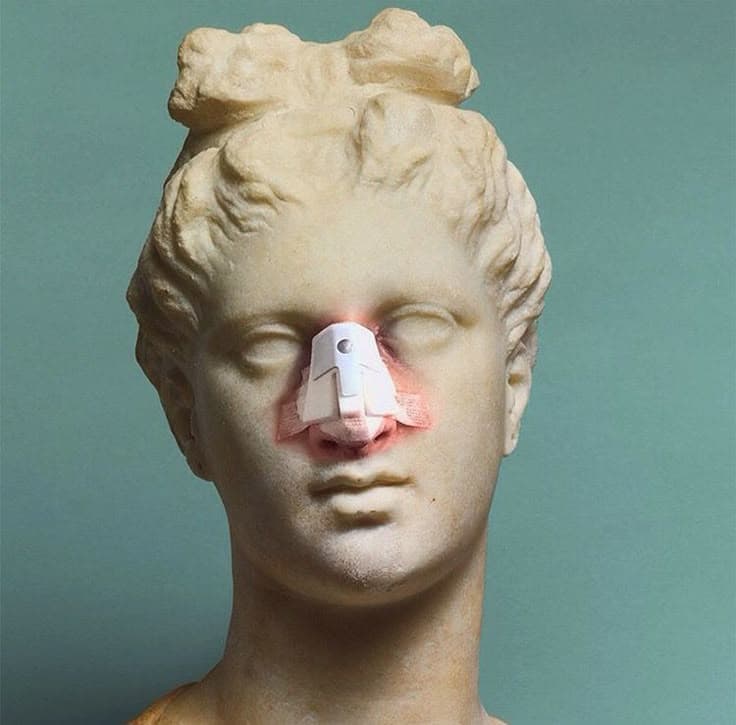
Thinking about a nose job in Turkey? Here's what international patients genuinely experience — the good, the practical, and the things nobody tells you beforehand.
Nose Job in Turkey 2026: What to Honestly Expect Before, During & After
If you're considering rhinoplasty in Turkey, you've probably read dozens of clinic websites telling you how wonderful everything will be. This article takes a different approach: an honest, practical account of what the experience actually looks like — from the first WhatsApp message to the moment you look in the mirror three months later.
Before the Trip: The Research Phase
Start with photos, not prices.
The most common mistake international patients make is leading with budget. Instead, start by collecting reference photos of nose shapes you find harmonious with your face — not someone else's ideal. Send these to your shortlisted surgeons with your own photos and ask: *Is this realistic for my anatomy?*
A surgeon who gives you a thoughtful, honest answer is more valuable than one who simply says yes.
Red flags to watch for:
Green flags:
Planning the Trip: Logistics That Matter
How long to stay?
Plan for 8–10 days minimum. Some patients try to squeeze it into 7, which is possible but leaves no buffer. Day 1: arrival and rest. Day 2: consultation. Day 3: surgery. Days 4–8: recovery and monitoring. Day 9–10: splint removal, final check, departure.
Where to stay?
Choose accommodation within 15–20 minutes of the clinic. You won't want to travel far in the first few days. Many clinics can recommend nearby hotels. Ask in advance.
Who to bring?
If possible, bring a companion — especially for the first 2–3 days post-surgery. You will feel groggy from anaesthesia, your vision may be slightly affected from swelling, and having someone to help with practicalities is genuinely valuable.
Travel insurance.
Non-negotiable. Make sure your policy covers surgery abroad and potential complications.
The Surgery Day: What Actually Happens
You will arrive at the clinic early morning, typically fasting. Pre-operative checks are completed (blood pressure, blood tests if not done already). You will meet your anaesthesiologist.
The surgery itself — under general anaesthesia — takes 2–3 hours for standard rhinoplasty, slightly longer for complex cases. You won't feel anything.
When you wake up, you will have a splint on your nose and possibly internal packing. Most patients describe the immediate post-op feeling as: *not painful, but deeply uncomfortable*. Pressure, stuffiness, and a strange taste from the packing are common.
You will be monitored for several hours before being transferred to your hotel or accommodation.
The First Week: The Unglamorous Truth
**Days 1–3** are the hardest. Expect:
**What helps:** ice packs (not directly on the nose), head elevation with extra pillows, staying hydrated, light foods, and — honestly — a good TV show to distract you.
**Days 4–7:** Bruising begins to fade (yellow tones appear — this is progress). Swelling starts to reduce. Most patients feel significantly better by day 5 and can take short, gentle walks outside.
**Day 7–10:** The splint comes off. This is a meaningful moment — the nose will still be swollen and won't represent the final result, but the rough shape becomes visible. Most patients feel relieved and positive at this point.
After You Go Home: The Long Recovery
Here is what nobody tells you clearly enough: **rhinoplasty recovery takes a year**.
**Important:** Don't judge your result too early. Patients who panic at week 3 about swelling almost always feel differently at month 3.
Communication After Return
Keep your surgeon informed. Send photos at regular intervals — month 1, month 3, month 6. Most surgeons are happy to review via WhatsApp or video call. If you have concerns, raise them early.
If something feels genuinely wrong (significant asymmetry, breathing problems, unusual pain), don't wait — contact your surgeon directly.
The Honest Bottom Line
Rhinoplasty in Turkey — done with a qualified, experienced surgeon — can be a genuinely excellent experience. The cost advantage is real. The surgical quality at reputable clinics is high. The logistics are manageable.
What it is not: quick, easy, or without a recovery period. Plan properly, choose your surgeon carefully, and be patient with the process.
The best results go to patients who did their research, had realistic expectations, and gave their body the time it needed to heal.

Bu makale Op. Dr. Emine Şakalar tarafından tıbbi açıdan incelenmiş ve onaylanmıştır.
Bu içerik yalnızca genel bilgilendirme amacıyla hazırlanmıştır ve tıbbi tavsiye yerine geçmez. Her hastanın durumu bireysel farklılıklar gösterir. Sağlık kararları vermeden önce mutlaka bir uzman hekime danışınız.